


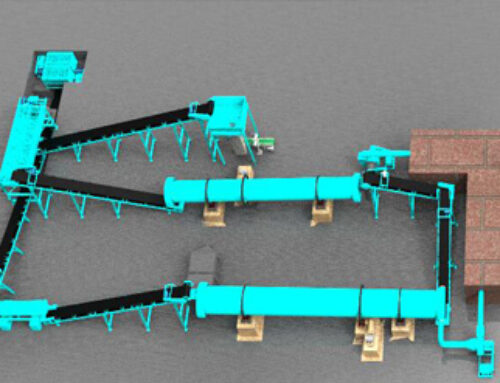
In recent years, due to the excessive use of chemical fertilizers, which has led to low resource utilization and increased environmental pollution, the market for organic fertilizer equipment has gradually expanded. We know that organic fertilizers, as traditional fertilizers, have unparalleled advantages in improving soil quality. Although chemical fertilizers still occupy the majority of the market, their overall market share has been declining, gradually giving way to organic fertilizer products. So how does organic fertilizer equipment work? Let's take a detailed look from the editor of Jinyuelong New Energy:
The raw materials for organic fertilizer products mostly come from livestock and poultry manure, which is a traditional fertilizer used in crop farming. However, it is now produced industrially and sold commercially. Although these raw materials belong to the waste of the breeding industry, they have natural properties and contain a large amount of nutrients, including basic nitrogen, phosphorus, and potassium, as well as rich and comprehensive organic matter. Especially, the addition of trace elements or biological bacteria during the industrial production process further enhances the efficacy of the fertilizer.
When it comes to livestock manure, our first thoughts are of the continuous stench and overflowing sewage, which bear no resemblance to the finished organic fertilizer equipment sold on the market. This also underscores that the production of organic fertilizer equipment is a complex process. The first step, fermentation, involves a lengthy time period, requiring the cooperation of bacterial cultures and turning machines to gradually kill harmful microorganisms in the raw materials, evaporate excess water, and ultimately turn them into odorless and harmless organic fertilizer raw materials.
The fermented material can actually be used for fertilization, as it has undergone thorough fermentation and will not cause seedling burn or pest and disease issues. Considering commercialization, the material needs to be further processed, which involves crushing and sorting. Large pieces of fertilizer need to be crushed for easier bagging. If there are impurities, they can be sieved out using an organic fertilizer screening machine, leaving only the fine and uniform powder. This not only ensures a good appearance but also makes it very convenient to use.
